Lawyer Profile
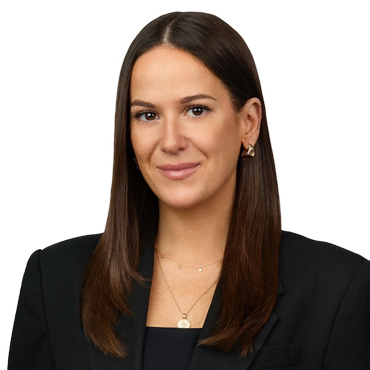
Myriam Brixi
Montréal, Québec
Overview
Quebec is a fertile ground for class actions, with over 550 active cases and between 50 to 100 applications for authorization filed each year. While 2023 marked the fifth anniversary of the “new” class action division: what is there to watch in 2024? Read on to find out. Opioids and the State: Sanis Health v. British Columbia Can a state be a plaintiff to a class action? Can it be the plaintiff to a class action in another state? Can it be a class member in another state? In 2018, British Columbia adopted the Opioid Damages and Health Care Costs Recovery Act1 [ORA] allowing the government to institute class action proceedings regarding “opioid-related wrongs.” This was modelled after an earlier legislation targeting “tobacco-related wrongs,”2 the constitutionality of which had been upheld by the Supreme Court.3 The ORA, however, allowed not only British Columbia to institute such proceedings, but also, provided it had commenced such an action, to bring it forward “on behalf of a class consisting of one or more of the governments of Canada and the provinces or territories of Canada.”4 The constitutionality of this provision was challenged, without success in the first instance5 and on appeal.6 Though the Court of Appeal upheld the validity of the provision, it did characterize it as “a bold step, if not an experiment, in bringing government-led class litigation as close as possible to truly “national” proceedings in Canada’s federal structure.”7 This boldness snowballed: Similar laws have been adopted throughout Canada.8 Unsurprisingly, the Supreme Court of Canada has granted leave.9 A hearing should be scheduled in 2024. Relatedly, in Quebec, the parties are awaiting judgment on an application for authorization to institute a class action against several pharmaceutical companies10 relating to the manufacturing, marketing, distribution and sale of opioids. In this case, the plaintiff is seeking to represent all persons in Quebec who suffer, or has suffered, from opioid use disorder following the use of prescription opioids since 1996. It is now settled law that one person may sue several defendants in a single action regarding an allegedly common practice even if that person does not have a direct cause of action against each defendant, provided that the proposed representative is otherwise able to adequately represent the members who do.11 It remains to be seen whether the representative plaintiff put forward in this case will be able to fulfill his role against approximately 20 companies having marketed more than 150 different products over more than 25 years. Jurisdiction over foreign defendants Are allegations sufficient to establish the jurisdiction of Quebec authorities over foreign defendants that are distinct from their Quebec subsidiaries?12 And if so, how should the geographical limits of the putative class members be defined? In the Bourgeois case, the proposed representative, a Quebec resident, is seeking authorization to institute a class action against several companies that develop and market video games with a “loot box” mechanism, which he claims constitutes a form of illegal gaming. Putative class members are not limited to Quebec residents such as himself. Moreover, many of the respondents are foreign companies, and some have no establishment in Quebec. Some of these foreign entities filed a declinatory exception, which the court dismissed. An appeal was filed, which includes arguments that the dismissal of the declinatory exception unduly broadened the definition of “establishment” within the meaning of article 3148 C.C.Q. Will the Court of Appeal give guidelines for determining whether such an issue should be addressed at the authorization stage? We should know soon as the Court of Appeal is expected to render judgment on this matter within the coming months. The appeal was heard on February 2, 2024. In 2023, the Quebec Court of Appeal had closed the door on the use of the guiding principles of procedure to broaden the scope of its jurisdiction.13 Earlier in the year, the British Columbia Court of Appeal had ruled that it had no jurisdiction over a class action relating to misrepresentations made outside its territory for lack of a “real and substantial connection”,14 and the Ontario Superior Court had followed suit.15 Clearly, class action law and private international law continue to cross paths, if not swords. More than 10 years later16 The majority of class actions are settled before they reach the merits. The same cannot be said for the case involving the Lac-Mégantic tragedy, in which the Court of Appeal is slated to hear the case on liability of certain defendant this year. On July 6, 2013, at 1:14 a.m., downtown Lac-Mégantic was set ablaze after a tank car train derailed. Images of the derailment were broadcast around the world. A class action ensued, filed on July 15, 2013. Authorized on June 8, 2015,17 it was joined with two civil suits, one instituted by the Attorney General of Québec [translation] “for all of the damages suffered by the Quebec State as a result of the tragedy,” estimated at over $231,000,000, and the other by a group of insurers.18 These proceedings were also split in order to first address the liability of the defendants Montreal, Maine & Atlantic [MMA] and Canadian Pacific [CP].19 On December 14, 2022, after a 63-day trial, spanning nine months, the Superior Court did not hold CP liable for the derailment, finding only MMA liable.20 Appeals were filed by both sides in January 2023, suspending the continuation of the trial for the remainder of the case.21 As the appeal materials were filed in the fall of 2023, there should be a hearing in 2024. Class counsel or representative’s counsel?22 Are the lawyers of the representative also those of the class? A trial judgment suggests that they should be considered so if it is in the interest of the class. The Court of Appeal will be ruling on this issue. The Court of Appeal may be called on to rule on this recurrent point of contention between lawyers who act mainly for the plaintiffs and those who act mainly for the defendants: does class counsel have a direct relationship with the members of the class, or is their legal relationship thereto contingent on the relationship they have with the representative? Labour law in Canada’s major junior hockey leagues gives the case its backdrop. Around 2020, the parties to three certified class actions, one in Alberta, one in Ontario and one in Quebec,23 agreed to a settlement that included a release. The scope of said release was the stumbling block—the three courts involved refused to approve the transaction and sent the parties back to the drawing board.24 A new release under the same agreement was drawn up in 2023. It was signed by the two representatives of the Quebec class, Lukas Walter and Thomas Gobeil, on May 9 and June 5, 2023. A date was then set for approval. In a surprising turn of events, on June 14, 2023, Walter and Gobeil informed their lawyers that they no longer agreed to the amended transaction, and notices of revocation of mandate were sent out a few days before the scheduled hearing date. Class counsel, claiming the need to safeguard the interests of the class members, asked the Court to reject the notices of revocation.25 The text of article 576 C.C.P. is unequivocal: the court appoints the representative. It is also clear from case law that it is the representative plaintiff who mandates counsel, not the reverse.26 Because the representative plaintiff is entitled to the counsel of his or her choice, like any other litigant, Walter and Gobeil were in principle entitled to revoke the mandates of their lawyers, even though said lawyers had been involved from the outset of the case. The matter complexifies when one considers the interests of the class members, as the trial judge writes: [translation] “Who will act in the case and whom will they be representing?”27 Possibly to assuage both sides, she acknowledged the revocation of mandate, but confirmed that the lawyers would continue to represent the class, stating that they [translation] “must uphold their duty to represent the class and present the terms of the settlement agreement as amended for approval.”28 In other words, she considered that class counsel had a direct relationship with the class. Needless to say, the case was appealed. The hearing on leave to appeal took place on February 29, 2024. Price higher than advertised: where’s the harm? What burden is imposed on plaintiffs who wish to institute proceedings under section 224(c) of the Consumer Protection Act, prohibiting the practice of hidden charges or drip pricing? A trial judgment states that the mere finding of a prohibited practice is not sufficient to prove actual harm. For the first time in reported case law, the Court of Appeal will consider a judgment on the merits dealing with the application of article 224(c) of the Consumer Protection Act. In this case, Union des consommateurs claims that Air Canada, during the first stage of an online ticket purchase process, failed to indicate the amount of taxes, fees, charges and surcharges included in the final price charged, thereby violating applicable legislation. Union des consommateurs is seeking a reduction in the price paid by members of the class corresponding to the sum of the charges, as well as punitive damages of $10 million. The Superior Court found that Air Canada had indeed advertised a price lower than that ultimately charged to class members. This finding of fault, however, did not relieve the plaintiff of the burden of proving actual harm. Because Air Canada demonstrated that there were clearly visible warnings that the advertised prices did not include all of the fees charged, the Court concluded that the prohibited practice was not likely to influence the formation of the contract.29 Since no harm has been demonstrated, no compensatory damages were awarded. As for punitive damages, the evidence did not show that Air Canada had engaged in “conduct […] which display[ed] ignorance, carelessness or serious negligence”. Moreover, Air Canada had ceased engaging in the contentious practice before the class action was authorized. The appeal was lodged on December 28, 2022, and should be heard this year. The upcoming decision will have a significant impact on a number of ongoing class actions under section 224(c) CPA. The decision will certainly shed some interesting light on the required proof of actual harm and the impact of the prohibited practice on consumers’ purchasing decisions. Devaluation of taxi licenses Will the Superior Court find that by adopting the Act respecting remunerated passenger transportation by automobile,30 the Quebec government expropriated taxi owners without paying fair and reasonable compensation? From April 1 to 24, 2024, the Superior Court will hear a class action on the revenue decline in the taxi industry attributed to the arrival of Uber, an online transportation platform having transformed the urban travel landscape by connecting users with independent drivers via a mobile app. The class action was authorized in 2018.31 The representative, who holds a taxi license, represents a group of taxi drivers and owners. He alleges that his loss of income and the depreciation in the value of his permits were caused by the legislator’s authorization of Uber’s business activities. He argues that the exemption provided to Uber by the law relative to taxi permit fees and the non-regulation of fares for its drivers have enabled Uber to charge far lower fares than those that regulated taxi operators charge. In this case, it will be interesting to see whether the Superior Court will apply the foundations of expropriation law to the class, which establish that no expropriation can take place without compensation for property rights. Member participation and class counsel’s fee to impose conditions relating to class counsel’s fees Can the Court make the full payment of the plaintiff’s lawyer fees contingent on achieving a certain level of participation of members of the class, even though it has already held that the fees agreed to in the settlement agreement were reasonable? Following the authorization of a class action on the false or misleading use of the word “champagne” by an airline that rather served a sparkling wine,32 the parties agreed to a settlement awarding the class members a 7% discount on their next purchase to be made within the next three years, without any restrictions. The settlement also provided for the payment of $1,500,000 to the class counsel, the reimbursement of expert fees and an envelope of up to $20,000 to maximize the settlement’s visibility on social media, without affecting the 7% compensation offered to members. The judgment approving the settlement authorizes the immediate payment of $751,450 to class counsel but makes payment of the balance conditional on achieving a participation rate of 50% of members, or 469,398 claims.33 The plaintiff applied for and obtained leave to appeal the decision.34 He also applied for the revocation, rectification and clarification of the judgment, in particular on the grounds that, under article 593 C.C.P., final payment of professional fees cannot be made conditional on achieving a recovery rate, and that the 50% rate is excessive. Only the second ground of the application was allowed, and the 50% participation rate was reduced to 10%, or 93,880 claims.35 The plaintiff has appealed this second decision. The judgment granting him leave to do so has been joined to the two appeals,36 and the factums are slated to be submitted in 2024. A number of decisions have already suggested that there needs to be a correlation between the professional fees of class counsel and participation of members in the benefits negotiated for them.37 The Court of Appeal’s upcoming ruling is certain to have significant implications on future settlements, and it will provide an interesting perspective on the discretionary power of trial judges to impose conditions relating to plaintiffs’ lawyers’ fees. Greenwashing: can a class action help the environment? Will the Superior Court authorize a class action on a misrepresentation that certain bags are recyclable?38 Does consumer law provide an entry for asking the courts to address environmental concerns? In recent years, many businesses have adopted environmental, social and governance practices (better known by the acronym ESG), often specifically performance criteria in these areas. However, some observers question the sincerity of these actions and sometimes consider them to be public relations schemes rather than genuine efforts on the part of businesses to reduce their environmental footprint or improve their social impact. This context will make it interesting to follow the progress of a class action on misleading representations concerning bags, which a number of superstores present as “recyclable,” when in fact they are only reusable as they are discarded by recycling plants in Quebec. If this class action is authorized, it could pave the way for further similar actions. Businesses that have adopted ESG practices and have made their commitment public should pay attention to the outcome of this case. SBC 2018, c 35. Tobacco Damages and Health Care Costs Recovery Act, SBC 2000, c. 30. British Columbia v. Imperial Tobacco Ltd, 2005 SCC 49. Sandoz Canada Inc. v. British Columbia, 2023 BCCA 306, para. 2. British Columbia v. Apotex Inc., 2022 BCSC 2147. Sandoz Canada Inc. v. British Columbia, 2023 BCCA 306. Sandoz Canada Inc. v. British Columbia, 2023 BCCA 306, para. 3. Québec being the last one with the Opioid-related Damages and Health Care Costs Recovery Act, SQ 2023, c 25, having been assented to and having come into force on November 2, 2023. Sanis Health Inc. v. British Columbia, SCC 40864 (November 9, 2023). Of the initial thirty-four defendants, a certain number agreed to settle out of court. Lavery, de Billy represents one of these defendants. Bank of Montreal v. Marcotte, 2014 SCC 55, para. 43. Bourgeois c. Electronics Arts Inc., 2023 QCCS 1011, leave to appeal granted: Electronics Arts Inc. c. Bourgeois, 2023 QCCA 826, only judge. Otsuka Pharmaceutical Company Limited c. Pohoresky, 2022 QCCA 1230, leave to appeal denied: SCC 40452 (May 25, 2023). Hershey Company v. Leaf, 2023 BCCA 264. Gebien v. Apotex Inc., 2023 ONSC 6792. Lavery, de Billy represented one of the defendants between 2013 and 2016. Ouellet c. Rail World inc., 2015 QCCS 2002, amended by Ouellet c. Canadian Pacific Railway Company, 2016 QCCS 5087. Ouellet c. Compagnie de chemin de fer Canadien Pacifique, 2017 QCCS 5674. Two other civil cases were suspended in the wake of these three cases, one by the same judgment, the other by 9020-1468 Québec inc. c. Canadian Pacific Railway Company, 2019 QCCS 366. Ouellet c. Compagnie de chemin de fer Canadien Pacifique, 2017 QCCS 5674. Ouellet c. Compagnie de chemin de fer Canadien Pacifique, 2022 QCCS 4643. Since June 30, 2023 article 211 C.C.P. prohibits the immediate appeal of a judgment rendered in a split proceeding that does not terminate the proceeding; there was therefore no reason to consider the consequences of possible asymmetry in res judicata in the case of a judgment that only partially puts an end to such a proceeding. Walter c. Quebec Major Junior Hockey League Inc., 2023 QCCS 3655. Walter v. Western Hockey league, 2017 ABQB 382; Berg v. Canadian Hockey League, 2017 ONSC 2608 and Walter c. Quebec Major Junior Hockey League Inc., 2019 QCCS 2334. Walter c. Western Hockey League, 2020 ABQB 631; Berg v. Canadian Hockey League, 2020 ONSC 6389 and Walter c. Ligue de hockey junior majeur du Québec Inc. 2020 QCCS 3724. Walter c. Quebec Major Junior Hockey League Inc., 2023 QCCS 3655, para. 13. Deraspe c. Zinc électrolytique du Canada ltée, 2018 QCCA 256, paras. 38 et s. Walter c. Quebec Major Junior Hockey League Inc., 2023 QCCS 3655, para. 23. Walter c. Quebec Major Junior Hockey League Inc., 2023 QCCS 3655, para. 24. Union des consommateurs c. Air Canada, 2022 QCCS 4254, para. 113, quoting to Richard v. Time Inc., 2012 SCC 8, para. 125. Act respecting remunerated passenger transportation by automobile, CQLR c. T-11.2. Metellus c. Procureure générale du Québec, 2018 QCCS 4626. Macduff c. Vacances Sunwing inc., 2018 QCCS 1510. MacDuff c. Vacances Sunwing inc., 2023 QCCS 343. MacDuff c. Vacances Sunwing inc.,2023 QCCA 476, only judge. MacDuff c. Vacances Sunwing inc., 2023 QCCS 4125. MacDuff c. Vacances Sunwing inc., 2024 QCCA 61, only judge. E.g., Daunais c. Honda Canada inc., 2022 QCCS 2485, paras. 132–133. Cohen c. Dollarama et al., SC 500-06-001200-225.
Is an event organizer responsible for an artist’s late appearance? Context is key, answers the Superior Court’s, as it dismisses the application for authorization to institute a class action against Gestion Evenko Inc.1 regarding Travis Scott’s late appearance at the Osheaga Music and Arts Festival in the summer of 2018. Overview of the first class action on this topic in Quebec. Background The Osheaga Festival, organized by the defendant, Evenko, is a huge celebration dedicated to music and visual arts where artists of all genres perform for three days on the many outdoor stages set up in Parc Jean-Drapeau on Notre-Dame Island. Rapper Travis Scott was on the lineup for the evening of August 3, 2018. His performance was scheduled from 9:45 p.m. to 10:55 p.m. on the River stage. Wishing to attend this performance, the plaintiff, who had purchased a weekend pass, went to the venue at 8:45 p.m. Unfortunately, Travis Scott was held up at customs that evening. The sequence of events can be summarized as follows. At 9:55 p.m., Evenko displayed a first message on the site’s giant screens indicating that the show was delayed for a reason beyond its control. At 10:15 p.m., Evenko broadcast a second message, both on the giant screens and on Twitter, indicating that Travis Scott had been delayed at customs and was on his way to Notre-Dame Island. At 10:30 p.m., the plaintiff left the premises; she claimed that she did not believe Evenko's messages, feared a curfew and found the crowd aggressive. At 10:40 p.m., Evenko broadcast a third message on the giant screens confirming that Travis Scott had arrived on the island. At 10:55 p.m., Evenko broadcast a fourth message announcing to festival-goers that the show was about to begin. The show started at 11:00 p.m. and ended around 11:40 p.m. An application for authorization to institute a class action was filed the next day. The plaintiff sought to represent nearly 50,000 festival-goers who, in her opinion, suffered prejudice attributable to Evenko. She claimed that Travis Scott’s 90-minute delay constituted a breach of contract by Evenko such that all members of the group should obtain a refund equivalent to the value of a daily pass. The Decision In carrying out the analysis required by section 575 of the C.C.P., Justice André Prévost concluded that the alleged facts did not appear to justify the conclusions sought. The application for authorization to institute a class action was therefore dismissed. From the outset, the Court questioned some of the allegations in the application: for example, the plaintiff’s assertion that [translation] “Travis Scott’s performance was the main consideration in the contract with Evenko” seems incompatible with the fact that she purchased a three-day pass (paras. 51, 56); similarly, there was no evidence to support her claim that the crowd was aggressive (para. 54). However, it is mainly two deficiencies in the legal syllogism that led the Court to conclude that the application for authorization did not establish an arguable case or a reasonable prospect of success (para. 66). First, the Court refused to reduce the Osheaga Festival experience to a single performance, even that of a headliner. Rather, it described the event as [translation] “a comprehensive experience [...] whose interest lies in the multiplicity and simultaneity of cultural experiences” (para. 48). In fact, in addition to the invited musical, cultural and circus artists, there are various activities, fairs, cruises and awards ceremonies, to name but a few (para. 48). The Court pointed out that all documents relating to Osheaga’s programming and schedule contain one or more of the following warnings: “Schedule and lineup subject to change” or “Artists and schedule subject to change” (para. 47). These warnings are a strong indication that such delays are far from unusual or, in the words of the Court, [translation] “this is not exceptional for those acquainted with the cultural milieu” (para. 57). In this context, Evenko cannot be found to be at fault. The Court continued its analysis, adding that, even if it were found to be at fault, which is not the case, the situation did not result in any compensable damage: Citing Sofio2 and Mustapha3, the Court pointed out that mere annoyance is not prejudice, and that, in fact, [translation] “there is no evidence that Travis Scott’s delayed performance caused a more serious inconvenience than what is usual for people attending festivals of this nature” (para. 65). In short, in the context of a multi-genre festival, an artist appearing late does not necessarily constitute compensable prejudice and does not automatically amount to the promoter’s failure to fulfil its obligations. What It Means The decision is important to the entertainment industry in that it recognizes that major event organizers sometimes deal with unforeseen circumstances and they are allowed reasonable leeway to adapt to them. Of course, each situation will be particular, but a well-informed promoter will make sure to indicate that changes are possible in its documentation. The decision also recognizes that a comprehensive cultural experience is more than the sum of its parts: a single artist appearing late does not cast a pall on the entire event. This conclusion is likely to apply to many other industries: Osheaga is a typical example of a set of distinct and simultaneous performances, but the same characterization can be given to all the rides in an amusement park or all the individual sections of a zoological garden. Our partners, Myriam Brixi and Laurence Bich-Carrière have successfully represented Evenko's interests in this case. Le Stum c. Gestion Evenko inc., 2019 QCCS 2422. The time limit for appeal expired on July 22, 2019. Sofio c. Organisme canadien de réglementation du commerce des valeurs mobilières (OCRCVM), 2015 QCCA 1820. Mustapha v. Culligan of Canada Ltd., [2008] 2 SCR 114, 2008 SCC 27.
Lavery is proud to announce that 42 partners are ranked among the leading practitioners in Canada in their respective practice areas in the 2026 edition of The Canadian Legal Lexpert Directory. The following Lavery partners are listed in the 2026 edition of The Canadian Legal Lexpert Directory: Asset Securitization Brigitte M. Gauthier Banking Étienne Brassard Class Actions Laurence Bich-Carrière Myriam Brixi Marie-Nancy Paquet Construction Law Laurence Bich-Carrière Nicolas Gagnon Marc-André Landry Ouassim Tadlaoui Corporate Commercial Law Étienne Brassard Jean-Sébastien Desroches Christian Dumoulin Alexandre Hébert Édith Jacques Paul Martel André Vautour Corporate Finance & Securities Josianne Beaudry René Branchaud Corporate Mid-Market Étienne Brassard Jean-Sébastien Desroches Alexandre Hébert Édith Jacques André Vautour Employment Law Benoit Brouillette Frédéric Desmarais Simon Gagné Richard Gaudreault Marie-Josée Hétu Guy Lavoie Josiane L’Heureux Zeïneb Mellouli Environment Valérie Belle-Isle Family Law Caroline Harnois Awatif Lakhdar Elisabeth Pinard Infrastructure Law Nicolas Gagnon Insolvency & Financial Restructuring Yanick Vlasak Insolvency Litigation Jean Legault Ouassim Tadlaoui Yanick Vlasak Jonathan Warin Intellectual Property Chantal Desjardins Alain Y. Dussault Isabelle Jomphe Eric Lavallée Labour (Management) Benoit Brouillette Brittany Carson Simon Gagné Richard Gaudreault Marie-Josée Hétu Marie-Hélène Jolicoeur Guy Lavoie Carl Lessard Zeïneb Mellouli Litigation - Commercial Insurance Dominic Boisvert Martin Pichette Litigation - Corporate Commercial Laurence Bich-Carrière Marc-André Landry Litigation - Product Liability Laurence Bich-Carrière Myriam Brixi Medical Negligence Anne Bélanger Mergers & Acquisitions Josianne Beaudry Étienne Brassard Jean-Sébastien Desroches Christian Dumoulin Alexandre Hébert Édith Jacques Mining Josianne Beaudry René Branchaud Occupational Health & Safety Josiane L'Heureux Professional Liability Marie-Nancy Paquet Judith Rochette Technology André Vautour Workers' Compensation Marie-Josée Hétu Josiane L'Heureux Guy Lavoie Carl Lessard
On November 20, 2025, Lexpert recognized the expertise of five partners in its 2025 edition of Lexpert Special Edition: Litigation. Laurence Bich-Carrière, Dominic Boisvert, Myriam Brixi, Marc-André Landry, and Martin Pichette are among Canada's leading experts in their respective fields. Laurence Bich-Carrière, is a member of the Quebec and Ontario Bar Associations, Laurence Bich-Carrière practices within the Litigation and Dispute Resolution group, in a versatile civil and commercial litigation practice specializing in complex litigation (class actions, appeals, extraordinary remedies, private international law). Dominic Boisvert, is a member of the firm’s Litigation Group. His practice is primarily focused on insurance law and civil liability. Since his call to the Barreau du Québec, he has developed his expertise in several specialized areas, particularly insurance coverage dispute and the distribution of financial products and services. Myriam Brixi, is a member of the Litigation and Dispute Resolution group and devotes a significant part of her practice to the defense of class actions. Her experience covers a wide range of class actions, including multi-jurisdictional proceedings, which has allowed her to develop solid knowledge of the procedural and strategic aspects of class actions in Canada. Marc-André Landry, is a member of the Litigation and Conflict Resolution group and focuses his practice on commercial litigation.He frequently assists his clients in resolving their disputes through negotiation, mediation or arbitration, or before the various courts of law. Over the years, he has represented businesses in many sectors, including construction, real estate, renewable energy, conventional energy, new technologies, financial services and pharmaceuticals. Martin Pichette, is a partner and a member of the Litigation and Conflict Resolution group of the firm. He acts primarily as a commercial and civil litigator, focusing on cases related to construction law, professional liability, damage insurance, and product liability. À propos de Lavery Lavery est la firme juridique indépendante de référence au Québec. Elle compte plus de 200 professionnels établis à Montréal, Québec, Sherbrooke et Trois-Rivières, qui œuvrent chaque jour pour offrir toute la gamme des services juridiques aux organisations qui font des affaires au Québec. Reconnus par les plus prestigieux répertoires juridiques, les professionnels de Lavery sont au cœur de ce qui bouge dans le milieu des affaires et s'impliquent activement dans leurs communautés. L'expertise du cabinet est fréquemment sollicitée par de nombreux partenaires nationaux et mondiaux pour les accompagner dans des dossiers de juridiction québécoise.
Lavery is pleased to announce that our partner Myriam Brixi has once again been ranked in Benchmark Litigation's 2025 Canada 40 & Under List and the Top 100 Women in Litigation. This prestigious directory ranks the leading litigators involved in Canada's landmark litigation cases who have distinguished themselves in the legal profession by providing outstanding service to clients. Each ranking is subject to an exhaustive peer review process and an assessment of the candidate's professional background. As a partner in Lavery's Litigation and Dispute Resolution group, Myriam Brixi focuses her practice primarily in the areas of class actions, product liability, consumer law and insurance law.She has participated in complex class actions raising important legal issues, including a wide range of multi-jurisdictional class actions. Myriam has received several prestigious recognitions from Benchmark Litigation. She was named Litigation Star earlier this year and Quebec Litigator of the Year in the Emerging Talent category in 2023.Congratulations to Myriam on this well-earned recognition of her talent and expertise. For more information, please go to: Top 100 Women in Litigation 2025 40 & Under List Canada 2025 About LaveryLavery is the leading independent law firm in Quebec. Its more than 200 professionals, based in Montréal, Québec City, Sherbrooke and Trois-Rivières, work every day to offer a full range of legal services to organizations doing business in Quebec. Recognized by the most prestigious legal directories, Lavery professionals are at the heart of what is happening in the business world and are actively involved in their communities. The firm's expertise is frequently sought after by numerous national and international partners to provide support in cases under Quebec jurisdiction.
Practice Areas
Bar Information
Called to the bar: 2010 (QC)